
The Umbwe Route is widely regarded as the most challenging route on Mount Kilimanjaro. Known for its steep ascents, dramatic landscapes, and remote wilderness atmosphere, it is the ideal choice for experienced trekkers seeking a true mountain adventure.
The Umbwe Route is widely regarded as the most challenging route on Mount Kilimanjaro. Known for its steep ascents, dramatic landscapes, and remote wilderness atmosphere, it is the ideal choice for experienced trekkers seeking a true mountain adventure. Unlike the more popular routes, Umbwe attracts fewer climbers, providing a quieter and more secluded experience on Africa’s highest mountain.
Approaching Kilimanjaro from the southern side, the route passes through dense rainforest, heath and moorland, alpine desert, and the arctic summit zone before reaching Uhuru Peak (5,895m). Due to its rapid ascent profile, proper acclimatization is essential, making the longer itineraries the preferred option for most climbers.
A fast-paced and demanding itinerary designed for highly experienced trekkers. This option offers limited acclimatization and a lower summit success rate.
Provides additional time for altitude adjustment, improving comfort and increasing the chances of reaching the summit successfully.
The recommended itinerary, featuring extra acclimatization time and significantly higher summit success rates.
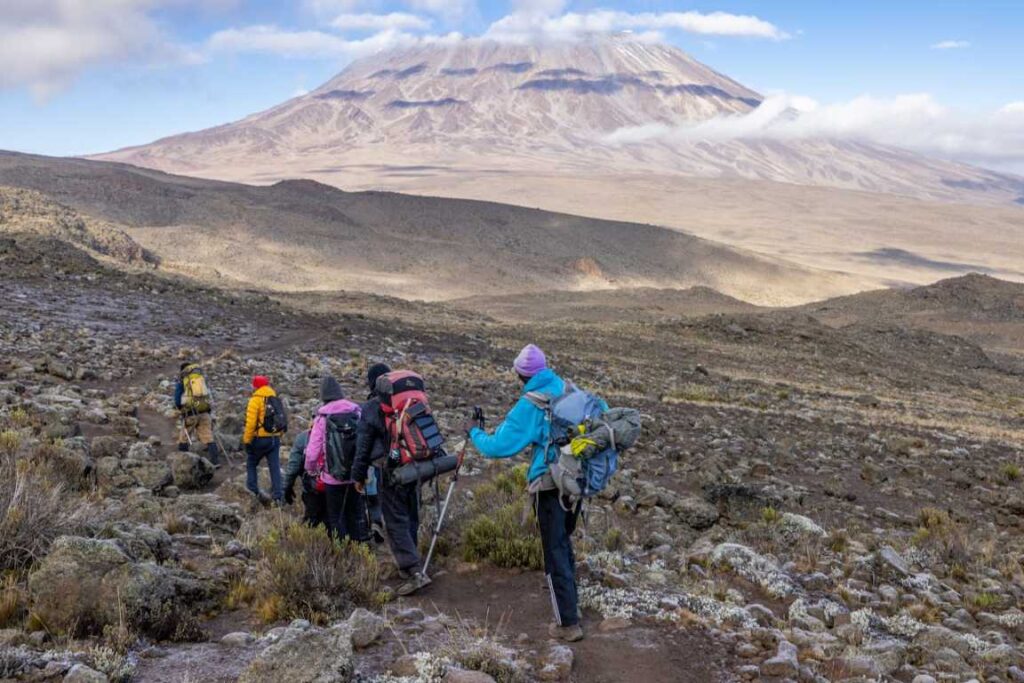
After registration at Umbwe Gate, begin your climb through a dense tropical rainforest. The trail is steep from the start, winding beneath towering trees draped in moss and surrounded by rich vegetation. Wildlife sightings may include black-and-white colobus monkeys and a variety of colourful bird species.
This is one of the steepest first-day ascents on Kilimanjaro, offering an immediate sense of adventure and achievement.
Hiking Time: 5–7 hours
Habitat: Rainforest
Overnight: Umbwe Cave Camp (2,850m)
Leaving the rainforest behind, the trail climbs into the moorland zone. As the vegetation changes, dramatic views of deep valleys, rugged ridges, and distant glaciers begin to emerge. The route traverses spectacular mountain terrain before arriving at the beautiful Barranco Valley beneath the towering Barranco Wall.
Hiking Time: 4–6 hours
Habitat: Moorland
Overnight: Barranco Camp (3,900m)
The day begins with the ascent of the famous Barranco Wall, one of Kilimanjaro’s most exciting highlights. Although steep in places, it is a non-technical climb and rewards trekkers with breathtaking panoramic views across the mountain.
After reaching the top of the wall, continue through rocky ridges and alpine valleys before arriving at Karanga Camp, where you can relax and enjoy the spectacular surroundings.
Hiking Time: 4–5 hours
Habitat: Alpine Desert
Overnight: Karanga Camp (4,035m)
Today’s trek leads to Barafu Camp, the final base camp before the summit attempt. The landscape becomes increasingly barren and rugged as you move higher into the alpine desert zone. Upon arrival, enjoy lunch, organize your equipment, and rest in preparation for the challenging summit climb ahead.
An early dinner and a few hours of sleep are essential before beginning the overnight ascent to Uhuru Peak.
Hiking Time: 4–5 hours
Habitat: Alpine Desert
Overnight: Barafu Camp (4,640m)
Shortly after midnight, begin your summit push beneath a sky illuminated by countless stars. The trail climbs steadily to Stella Point on the crater rim before continuing to Uhuru Peak, the highest point in Africa at 5,895 metres.
Reaching the summit at sunrise is an unforgettable achievement, offering magnificent views across glaciers, volcanic landscapes, and the plains below. After celebrating your success and taking photographs, descend back to Barafu Camp for a brief rest before continuing to Mweka Camp.
Summit Altitude: 5,895m
Total Trekking Time: 12–16 hours
Overnight: Mweka Camp (3,080m)
After breakfast, enjoy your final descent through Kilimanjaro’s lush rainforest. Upon reaching Mweka Gate, receive your summit certificate and celebrate your accomplishment with your mountain crew. A transfer will then take you back to Moshi or Arusha for a well-deserved rest.
Hiking Time: 3–4 hours
Habitat: Rainforest
The 7-day itinerary includes an additional acclimatization day, usually spent between Barranco Camp and Karanga Camp or near Barafu Camp. This extra day allows your body to adapt more effectively to the altitude before summit night.
The 7-Day Umbwe Route is strongly recommended for most climbers. The additional acclimatization day greatly improves the chances of reaching Uhuru Peak successfully while making the overall trek safer and more comfortable. Although the Umbwe Route remains one of Kilimanjaro’s most demanding routes, proper acclimatization transforms it into an unforgettable and highly rewarding adventure.
• International flight
• Personal items [Souvenirs, Travel Insurance, Visa fee,
• Government imposed increased of taxes or Park fees.
• Tipping [Gratitude to your guide 15-20$ pp pd].
• Additional accommodation before or after safari